Pop Up A-Frame Banners vs Pavement Signs: Which Sidewalk Sign Should You Buy?
Every retail manager, franchise owner and event marketer eventually stands in front of the same shelf: the rigid pavement sign, also called a sandwich board or A-board, and the newer pop up fabric A-frame banner. They look similar from across the street — two legs, a face, a message. They behave completely differently once the wind picks up, the promotion changes, or the storage cupboard fills up. We manufacture the fabric version, so take this as an honest inside view: where our product genuinely wins, and where the old steel A-board is still the right answer.
Updated 20 November 2026 · Reading time about 8 minutes · By the Dtent display team
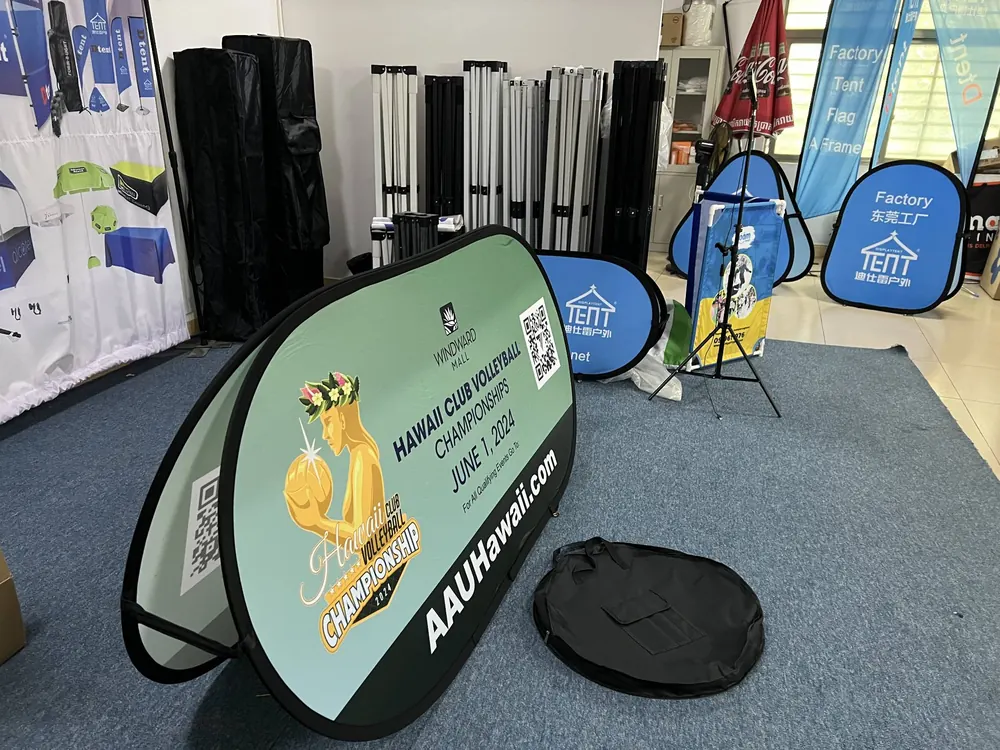
Two products, one job — but two very different lives
A pavement sign lives a stationary life: it stands in one approved spot, usually bolted, chained or weighted, and it stays there until the sign itself is replaced. A pop up A-frame banner lives a mobile life: it pops open from a round carry bag in seconds, works an event, a sidewalk, a mall entrance or a trade show aisle, folds flat again, and moves on. The moment you expect your sign to travel, the comparison is already over.
The comparison gets interesting in the middle ground — the storefront that changes its promotion monthly, the café that wants something out only on sunny weekends, the real estate agent who moves between listings. There, weight, print economics and storage decide the winner, not raw appearance.
Why classic pavement signs frustrate their owners
We hear the same complaints from buyers switching to fabric A-frames, and they cluster into four groups:
- Weight. A steel or PVC A-board with a ballast base runs 8–20 kg. One person struggles; two people are routine. Try carrying six of them to a weekend market and the product earns its nickname, the "sandwich board of burden".
- Wind. A rigid face is a solid sail. Unweighted boards tip, skate along the pavement, and in gusts go over entirely — chipping the frame, the paving, or occasionally a customer's ankle.
- Print cost. The face is a rigid panel: vinyl applied in a print shop, or a chalk write-up. Reprinting for each campaign costs almost as much as the board did, so owners keep stale promotions outside for weeks longer than they should.
- Storage. Rigid boards do not fold. A single unit is fine; a set of ten needs a racking shelf most shops do not have.
None of these are deal-breakers on their own. Together, they are exactly why the fabric pop-open frame exists.
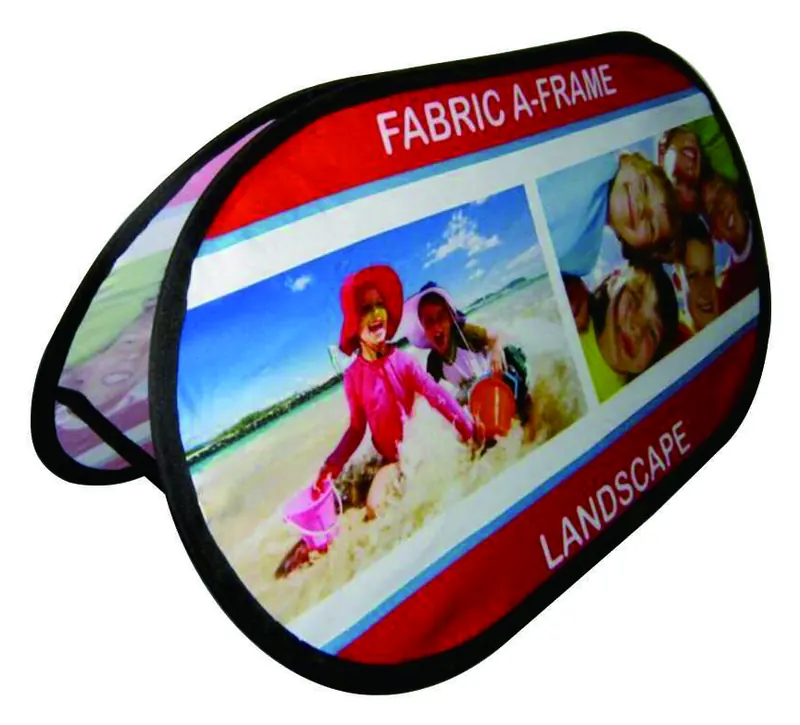
Head-to-head: the spec comparison
Here is how the two products compare on the attributes that actually come up in purchase decisions:
| Set-up | Fabric: pulls open from its bag in seconds, no tools. Rigid: carry and position, then weight or chain it down. |
| Weight | Fabric: about 2–4 kg per banner, frame and print included. Rigid: typically 8–20 kg with ballast. |
| Fabric: full-colour dye-sublimation on polyester — photos, gradients, QR codes at no ink surcharge. Rigid: vinyl graphics or chalk, panel limits apply. | |
| Both sides | Fabric: double-sided with a blockout layer, message reads correctly both ways. Rigid: double-sided panels exist but add weight and cost. |
| Reprint cost | Fabric: a fresh printed banner at near the original unit price, MOQ 1. Rigid: re-vinyling often rivals the cost of a new board. |
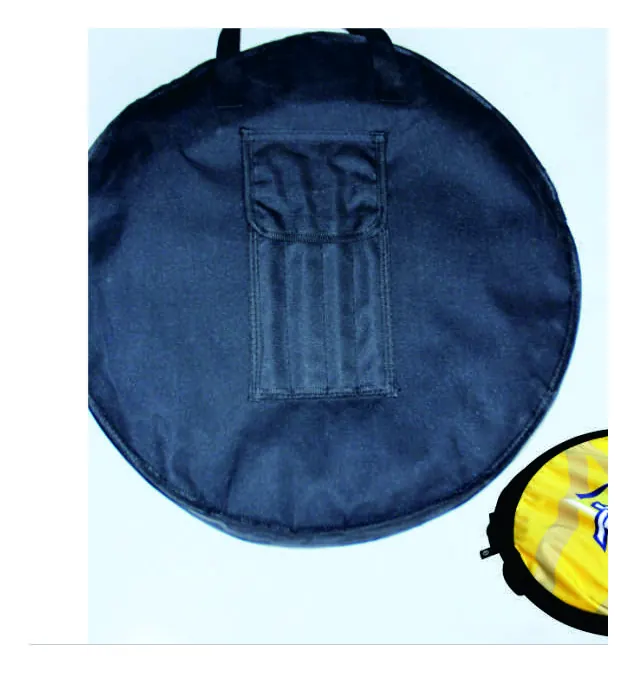
| Storage | Fabric: folds flat into a round zip bag; ten banners fit in one shelf cube. Rigid: does not fold; needs floor or rack space. |
| Failure mode | Fabric: tips flat in extreme gusts, weighs two kilograms, no sharp edges. Rigid: can cartwheel, chip or shatter. |
One row deserves emphasis: failure mode. Nobody budgets for the day a sign blows into traffic. The fabric frame's worst case is falling over flat and being picked up; a hollow PVC board's worst case involves a road, a car and an insurance conversation.
Wind and weather on the pavement
Both products have to survive the same street, so anchoring decides day-to-day reliability. Every pop up A-frame we build has integrated sand pockets along both lower rails — fill them on site and several kilograms of ballast land exactly where wind catches the face. No separate weights to buy, ship or forget at the depot. For exposed forecourts and beach-adjacent sidewalks, add ground stakes through the corner loops or water-weight bags beside the rails, and angle the face 10–15 degrees into the prevailing wind.
Set honest limits: a weighted fabric A-frame stands through a normal retail day including gusty weather. In sustained winds above roughly 40 km/h, fold it back into its bag until it eases — the same call a sensible owner makes for any temporary signage. The rigid board handles the same wind only when its ballast is properly filled, which in practice is the state it is in about half the time. We sell to café and retail chains whose previous boards went over so often that staff simply left them inside; those chains order fabric A-frames now precisely because the fill-and-forget sand pockets get used.
The theft and damage question
Sidewalk signs get stolen, kicked and clipped by trolleys. Here the two products differ in philosophy. A heavy rigid board is harder to walk off with — but when it is stolen or damaged, the loss is the full board, reprint included. A fabric A-frame is light enough that someone could carry it off, which is why our retail customers treat it the way they treat umbrellas: it goes out at opening, comes in at closing, and lives in the back of the store overnight. That thirty-second routine removes most of the theft exposure, and the banner that does get damaged costs a fraction of a rigid unit to replace.
Damage behaves differently too. A trolley strike dents or cracks a rigid panel permanently; the fabric face absorbs the same hit and pops back to shape. Over a season of daily use, that difference is most of the reason the fabric banner outlives the board.
Total cost of ownership: one year on the sidewalk
Sticker price comparisons mislead, because a sidewalk sign is a subscription to messages, not a single purchase. A realistic year for a promotion-driven retailer looks like this:
- Rigid board route: buy the board once, then pay a print shop for new vinyl every campaign — often 4–6 times a year. Add the labour of carrying a 15 kg unit in and out daily, and the campaigns you skip because reprinting "wasn't worth it this month".
- Fabric A-frame route: buy two or three printed banners (campaign A, campaign B, and a generic brand face) and swap them on the same frame in a minute. Seasonal refreshes are a reorder of fabric only, MOQ 1, produced in the standard 7–12 working day window.
The frame is furniture; the faces are consumables. Once you think in those terms, the fabric system's economics are hard to argue with — particularly for franchises and chains where one artwork change rolls out across dozens of locations at once. That multi-location logic is the same one behind the variable-logo production we run for race organizers, covered in our sports events guide.
Where each product genuinely wins
Honesty time, because a comparison that ends in "always buy ours" helps nobody. The fabric pop up A-frame wins when the sign moves, changes or travels: retail promotions, mall and shop entrances, real estate opens, trade show aisles, markets and fairs, sports courses, school and club events. It also wins wherever storage is tight and wherever photo-quality printing matters — matte fabric faces photograph cleanly, so the same banner works in your social posts without glare.
The rigid pavement sign still wins when the sign stays: a bolted, chained, permanently-placed board outside a fixed premises, or a chalkboard café menu rewritten by hand every morning. If your sign never moves and your message changes daily by hand, a chalk A-board remains the sensible tool. For everyone else in the middle — and that is most of the enquiries we field — the fabric frame is the better buy.
Double-sided or single-sided for street use?
Street-facing placement is the classic double-sided case. Pedestrians walk past in both directions; cars approach from two ways; the sidewalk curves around corners. A single-sided banner shows its blank reverse to roughly half of that audience for the whole day. Our double-sided build sews two printed fabric layers around a blockout middle, so neither face shows through the other in sunlight and both read correctly.
Keep single-sided for against-a-wall spots: inside the entrance, against a barrier, behind a registration table. If budget forces a split, that is the split — double-sided outside, single-sided inside. The full options list, including all four shapes and twelve sizes, lives in our complete A-frame buying guide.
Sizing for sidewalk viewing distances
Pavement signage lives or dies at reading distance, and the arithmetic is simple: letter height of about 2.5 cm per 3 metres of viewing distance, and never more than three lines of text. Translate that to the sidewalk:
| 5–10 m (passing pedestrians) | Oval or Bean 70 × 120 cm — the standard shopfront size; a 100 mm headline reads at ~12 m |
| 10–20 m (across a forecourt) | Vertical 80 × 120 cm or Oval 100 × 200 cm |
| 20–40 m (car parks, road frontage) | Oval 110 × 260 cm — large fairway-style banner, text visible from a slow-moving car |
| Desktop & queue areas | Mini desk-top versions — same pop-open frame at A3 scale |
Fine print is invisible past about 5 metres, so keep terms, prices in small type and QR codes large enough to scan at arm's length. If the sign has to work for passing drivers, pair it with a taller vertical product instead — feather and teardrop flags buy you three to five metres of height that no A-frame of any material can.
Care, washing and storage between uses
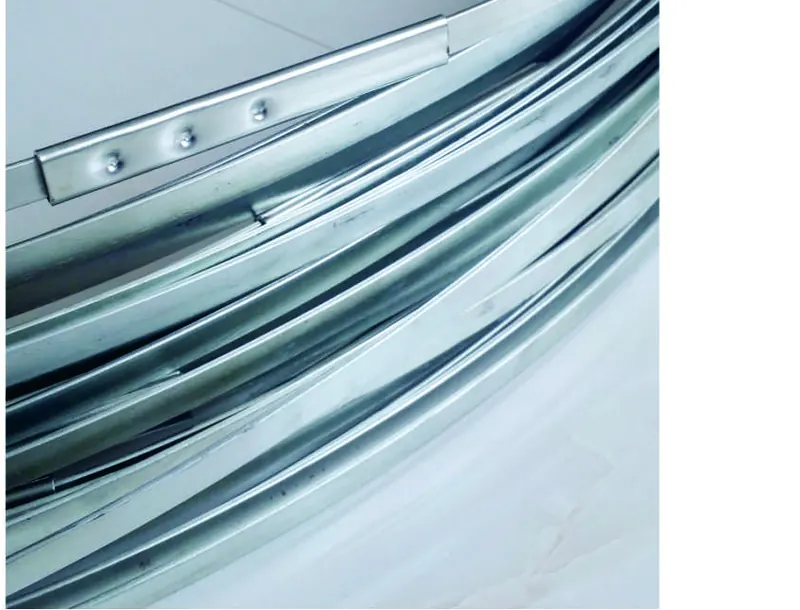
The fabric faces machine wash on cold — no dry cleaning, no special handling. Wipe off pavement dust with a damp cloth for daily resets; run a proper wash at the end of each campaign. Dry folded or hung, roll rather than crease for long storage, and keep the frame closed with its strap. A set stored dry in its round bags comes out looking like the day it shipped. The coated spring-steel frame does not rust, and it keeps its tension for years of daily pop-open cycles — our longest-running retail customers are on year three of the same frames with their third set of prints.
Ordering a set: quantities, lead time and shipping
MOQ is 1 piece, with volume breaks from 10 pcs, so a single storefront can start small and a chain can scale the same artwork across locations. Production runs 7–12 working days after artwork approval — this is one of the fastest products in our factory — and rush options exist for fixed launch dates. Because each banner folds flat into a round zip carry bag, shipping is unusually cheap: express door-to-door typically lands in 5–8 days, and a set of ten storefront banners fits in a fraction of one carton. The full planning method for ordering against a fixed date — including holiday windows that surprise first-time importers — is in our lead time guide.
Artwork is straightforward: send vector files (AI/PDF/EPS) at 1:10 scale, or high-resolution JPG/PNG. Our designers check every file, and you get a free mock-up and quotation within 24 hours.
Next step
Tell us where the sign will stand — sidewalk, forecourt, mall entrance or event floor — how many placements, and how often your message changes. We will recommend shape and size per placement, propose a frame-plus-faces setup that matches your promotion calendar, and quote the full set with a written production and shipping schedule. Product page, shapes and prices are here; or send your logo straight to the quote form below.