Roadshow Canopy Kits: How to Configure Booth Packages for a Multi-City Tour
A single-event buyer asks "what is in the box". A tour buyer asks how many boxes, how heavy, and how fast two people can turn one city into the next. That second conversation is what this guide is for: the configuration logic we use when an agency tells us they are going on the road — kit counts, architectures, case weights, the stop standard and the cost per stop that decides it all.
Updated 14 November 2026 · Reading time about 9 minutes · By the Dtent® roadshow team
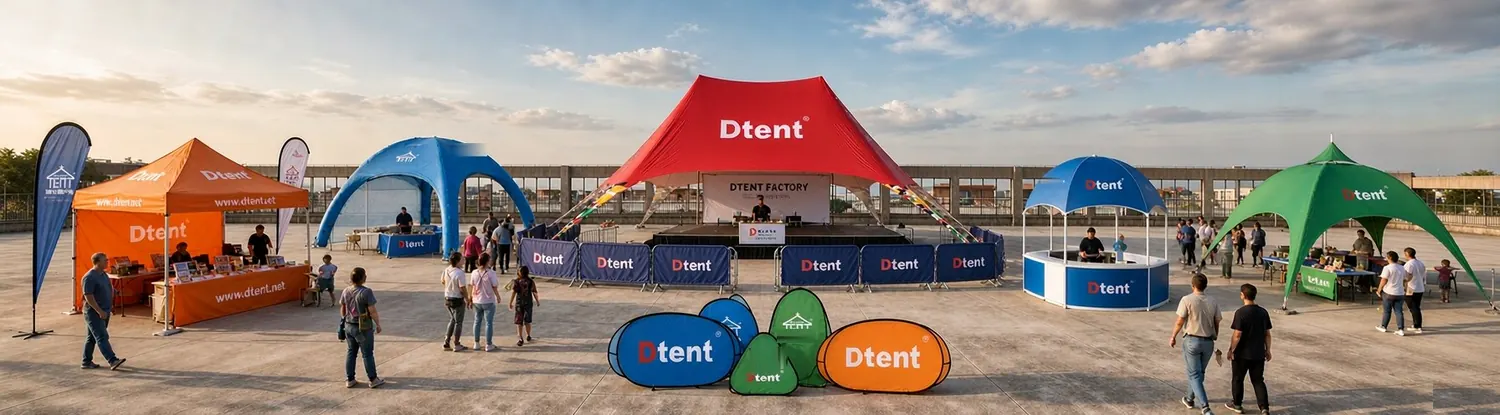
A tour is a production line, not an event
The mistake we see most on first-time roadshows is buying the kit that suits the photograph rather than the schedule. A tour is not one beautiful booth repeated twelve times. It is a supply chain with a booth at the end of it: a vehicle, a crew, a storage room, venues with different load-in windows, and a marketing calendar that will change a logo in week five.
So the first decision is not "which kit" but "how many kits, running in how many places, moved by whom". Get that wrong and the graphics stop mattering, because the crew is still unloading at 11pm in a city they have never worked in.
Kit count: the only formula that matters
Count concurrent activations, never cities. If the tour runs two setups at the same time — a mall activation and a dealer showroom, say — then you need two live kits. Cities that run one after another can share a kit, as long as there is time to truck it between stops.
The formula we quote to agencies: one kit per concurrent activation, plus a 20–25% buffer. The buffer is not padding. It covers the three things that always happen: a canopy top damaged in transit, a stop added at short notice, and a spare kit sitting pre-built in the warehouse so the crew loads at 8am instead of 10am.
| 1 activation, monthly stops | 1 kit + 1 spare canopy top |
| 2 concurrent activations, 10–14 cities | 3 kits (2 live + 1 spare) |
| 4 concurrent activations, national retail tour | 5 kits, one set pre-built at the warehouse |
| Dealer tour, kits gifted or sold to dealers | 1 kit per dealer + 1 demo kit that travels |
That last line changes the buying decision entirely. When dealers keep the kit, the question stops being "what survives a tour" and becomes "what still looks right in a showroom two years from now" — a different frame grade, and a stronger case for a higher tier.
Three kit architectures that actually travel
Almost every roadshow we ship follows one of three shapes, differing in where the visual impact is concentrated.
The hero kit. One large focal structure — typically a 10x20 canopy with a full printed backwall, a reception counter and four flags — plus a small table setup. It wins on photography and dwell time, and it suits stops with one camera-facing moment: a launch, a press visit, a ribbon cut. Its weakness is footprint: it needs 20ft of clear frontage and a venue that will give it to you.
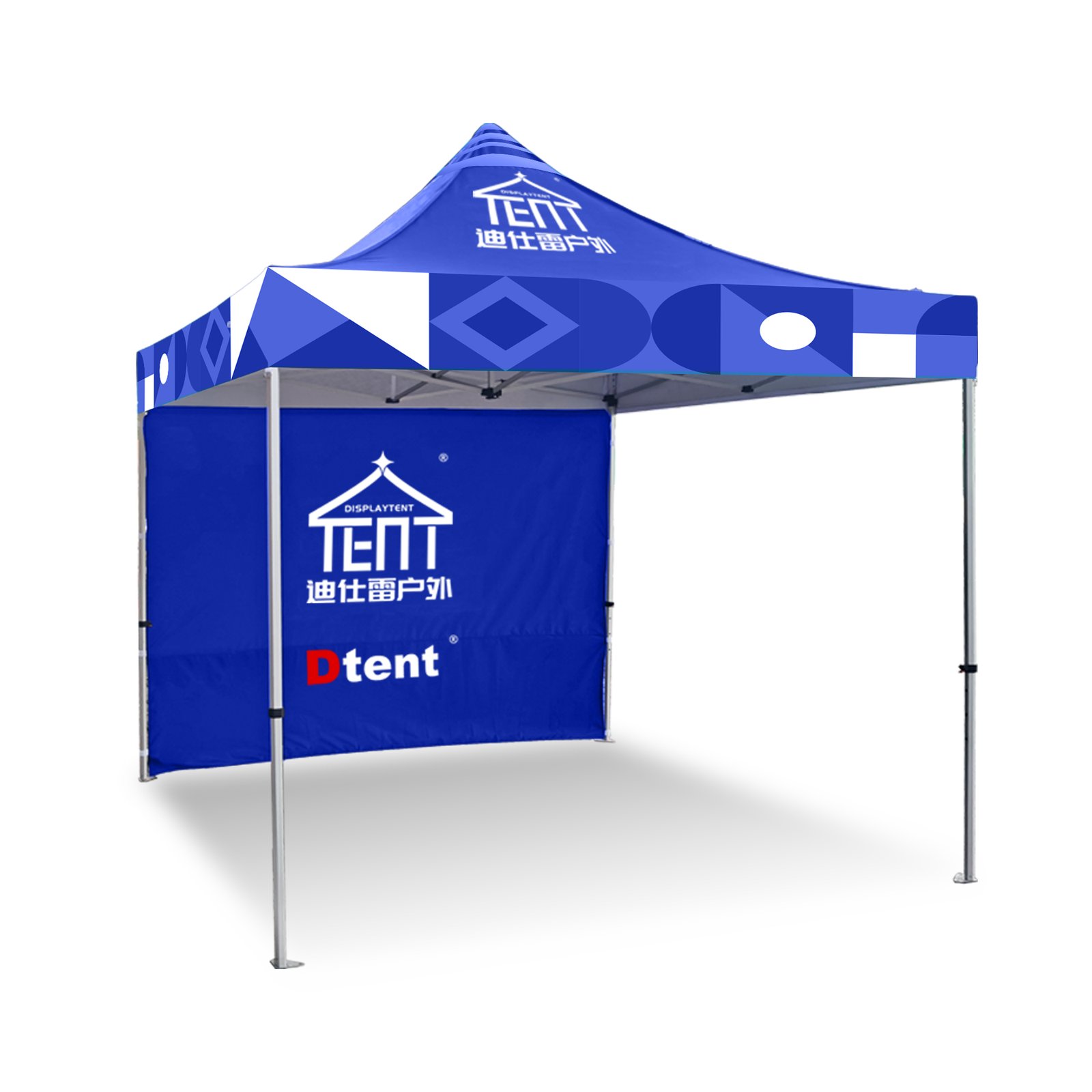
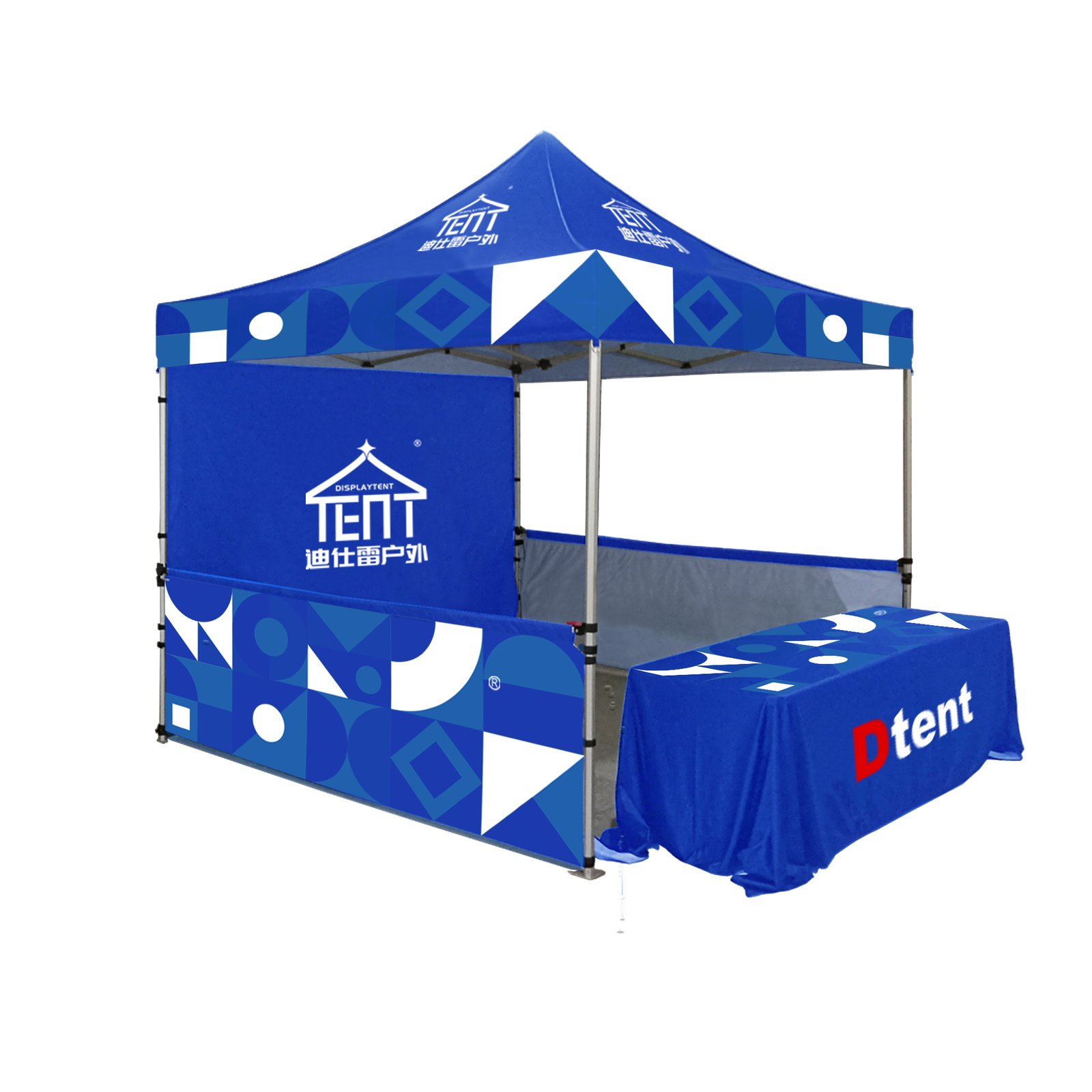
The modular pod set. Four to six 10x10 kits, each a self-contained bay with its own backwall and table cover, arranged in a row or a U. Sampling tours and mall activations use this, because pods split across two floors or two venues without redesigning anything. Storage is easier too — four roller bags stack in a corner; a 10x20 frame does not.
Hub and spoke. One Premium-level hub kit for the main stage or press moment, plus Starter-level satellites for registration, queuing, a photo point and staff rest. It is the most common national-brand configuration, because it spends money where the camera is. Our three standard tiers map onto it cleanly: Starter, Standard and Premium packages at $209–$680 per kit.
Matching the configuration to the tour type
The tour type decides the footprint, and the footprint decides the kit. These are the five we quote most:
| Tour type | Typical footprint | Kit tier | The piece that matters |
|---|---|---|---|
| Mall / retail activation | 10x10, 2–3 pods | Starter or Standard | Table cover and backwall — mall rules rarely allow staking or tall flags |
| Dealer & distributor tour | 10x10 per dealer | Standard | Full wall set — dealers want a room, not a stall |
| Festival circuit | 10x10 or 10x15, outdoor | Standard | Sandbags and sidewalls — wind, sun and overnight security |
| Trade show series | 10x20 island or corner | Premium | Counter, lighting, flooring — the hall already supplies the walls |
| Sampling / demo tour | 3x3 to 5x5 dome or canopy | Starter + counter | Queue management and a work surface at the right height |
One pattern holds across all five: the tier that travels best is usually one step above what the client first asks for — not because of fabric quality, but because the cheaper build arrives without the accessories that make a stop repeatable.
Cases, weight and whether it fits in the van
Nobody asks at quoting stage; everybody asks three days before load-in. Our planning estimates, used for freight quotes and for vehicle space:
| 10x10 printed canopy + frame, in roller bag | 25–30 kg, one piece about 160cm long |
| Feather flag + pole + cross base | 8–10 kg per flag, one bag each |
| Printed backwall / sidewall set | 3–5 kg, folds into the canopy bag |
| Fitted 6ft table cover | under 2 kg |
| Sandbags (filled on site) | shipped empty — fill locally, never pay to fly sand |
A Standard Kit therefore travels as three to five pieces and roughly 50–65 kg. That number, not the kit count, decides vehicle size: two Standard kits plus a table and counter fit a long-wheelbase van; four kits plus crew luggage do not — the fix is a second vehicle or a smaller satellite tier.
The rule we give every crew: pack in the reverse order of setup. Whatever comes out first goes in last.
Setup and strike: the 90-minute stop standard
Two people, one Standard kit, no venue help: 45–60 minutes up, 30–40 minutes down, once the crew has done it twice. Most of that time is not the tent — it is finding the power point and re-hanging a wall that was folded inside out.
The sequence that gets you to 90 minutes reliably:
- Frame first, roof second, walls third. Walls on before the roof is tensioned is the single most common cause of a 20-minute delay.
- Sandbags before styling. Weight on all four legs, then flags, then table, then product. A kit that looks finished before it is anchored will be photographed mid-flight.
- One pre-built bay per stop where the schedule allows. Arriving with something already standing changes the mood of the whole load-in.
- Label every bag with kit number and position — Kit 2 / bag 1 of 3 / backwall. Not Dtent® bags.
On strike, photograph the packed bags before the truck door closes. It sounds fussy until the third city, when the missing cross base has to be replaced locally at four times the price.
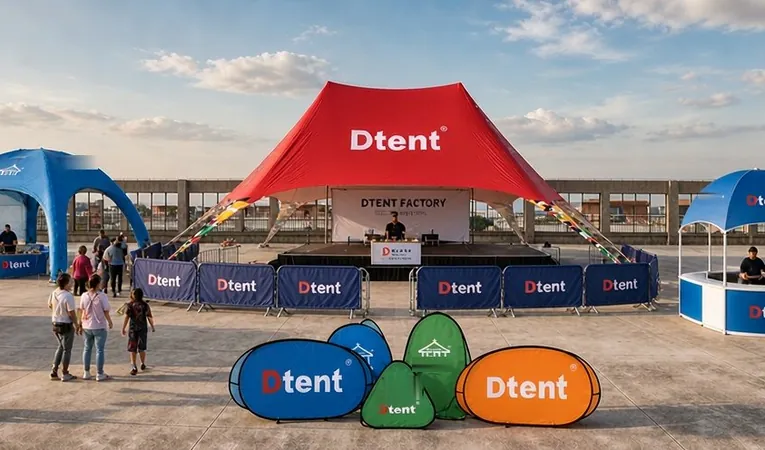
A hub-and-spoke setup in one frame: the stage is the hub, the canopies, pop-out displays and barricade covers are the satellites — all printed in the same brand colours.
Spares, consumables and the 3% rule
Tours break things, and they break them at the worst possible moment. The spare list we recommend for six stops or more:
- One spare canopy top per four kits — the top fails first, usually at a zipper or corner pocket, and it is the one part that cannot be improvised
- Two spare flag poles and one spare cross base per tour — poles bend in vehicle doors, bases get left at venues
- A hardware bag: spare bolts, frame pins, a ratchet strap, gaffer tape in brand colour
- Two extra sandbags — every venue has one corner more exposed than the drawing suggested
- A touch-up kit: fabric marker in your brand colour, spare zip pulls
Budget spares at roughly 3% of the kit order value — about $60 on a five-kit programme at $400 average, a rounding error against the cost of a dark stop. Order them in the same production run and colour batch, because a spare top replaced six weeks later will never match exactly.
Graphic refreshes between legs
The second most common tour problem is marketing changing something in week five: a new campaign line, a co-brand lockup, a locally translated panel for the Quebec or Mexico legs. If the kit was printed as one unit, that change costs a whole new booth. If it was built from modules, it costs one wall.
Two habits make it cheap. Design every wall as a replaceable panel at the same finished size, so a reprint is a straight swap and the frame never changes. And version the artwork on the bag label — "Backwall v2, printed 2026-11" — so the crew knows which bag is current before they hang the wrong one in a press photo. Dye-sublimation prints from a digital file, so a partial reprint runs in the same 7–12 working day window as a full kit, with no plate or screen setup.
When the tour crosses a border
Temporary import is where roadshow budgets quietly die: a kit that flies into one country and drives into the next needs a carnet, or it needs to be cheap enough to write off. Most brands avoid this by sourcing for the region — one order, one warehouse, DDP — and keeping that kit inside the region for the whole tour.
For anything crossing more than one border per leg, consolidate into a single shipment to a regional 3PL and move kits on the tour truck — the freight maths is in our FCL vs LCL vs DDP guide. If a tour starts before the order is finished, ask for staggered deliveries: first leg ships first, the balance held and released on your call.
Cost per stop: the number that decides the configuration
A kit is a capital item; a stop is an operating cost. Compare configurations on cost per stop and the decision usually makes itself.
Take a 12-stop tour quoted in our $209–$680 per kit range. Three Premium kits at $680 is $2,040 over 12 stops — $170 per stop before freight and before a single reprint. Three Starter kits at $209 is $627, or $52 per stop. The gap is $118 per stop, and the question becomes a marketing one: does the hero wall and the counter earn more than $118 in a stop?
Often it does — but only at the stops with press or photography. At the other eleven it does not, which is why hub-and-spoke exists: Premium where the camera is, Starter or Standard everywhere else, and a blended cost per stop typically 25–35% below an all-Premium programme.
Two costs are easy to forget: storage between legs (a five-kit programme needs a pallet position or a lockup, not a shelf) and the labour of building extra kits. At 90 minutes per stop, ten more stops is 15 crew hours — often more than the hardware saving.
The ordering calendar for a tour
Work backwards from the first load-in, not the first show day:
| Artwork freeze | 2 weeks before production starts |
| Production | 7–12 working days for a standard kit; 12–18 days for a large mixed order |
| Sea freight + inland delivery | add 4–7 weeks depending on destination |
| Order point — US | 6–8 weeks before the first stop |
| Order point — Europe | 8–10 weeks before the first stop |
| MOQ | 1 kit, so a single demo kit can be ordered first and tested on one stop |
The full backwards-planning method, including the Chinese New Year window that catches first-time importers, is in our lead time guide. For a tour, add one item: a dress rehearsal. Build one kit in the warehouse, time the setup, photograph it and send it to marketing. It costs half a day and it is the cheapest way to discover the backwall hangs 10cm too low behind the counter.
Next step
Send us four numbers and we can configure the programme in one reply: how many stops, how many activations run at the same time, the footprint at the tightest venue, and the date of the first load-in. You get back a kit count, a tier recommendation per position, a case and weight list for vehicle planning, and a production schedule against your first stop. Item-by-item contents of each tier are in What's in a 10x10 Trade Show Booth Kit; the tiers and full spec table are on the Canopy Tent Packages page.