Booth Kit vs Buying Separately: The Real Total Cost of a Trade Show Booth
"Can we just buy the pieces ourselves and save money?" — we hear this question a few times a week, and it deserves a better answer than a sales pitch. So here is the honest arithmetic from our side of the factory floor: what a complete booth kit actually costs, what buying the same items from separate suppliers actually costs, and the three costs that never show up on either quote. Some of the results surprised even us.
Updated 28 November 2026 · Reading time about 8 minutes · By the Dtent exports team
Why "what does it really cost?" is the right question
A trade show booth is not one product. It is a canopy, two or four flags, a table cover, printed walls, sandbags, bags — six or more line items that have to arrive together, match each other, and survive handling. When buyers price that setup, they usually compare unit prices: canopy here, flags there, covers somewhere else. Whoever's spreadsheet wins the lowest total gets the order.
The problem is that unit prices are not total costs. Between quote and show floor sit freight consolidation, color matching, receiving schedules, customs paperwork, rework risk and your own procurement hours. Buying in a kit moves most of those costs off your desk and into ours — which is precisely why kit pricing can be lower than the sum of the parts. Let's walk through the numbers.
What "buying separately" actually looks like
Picture the typical split-supplier approach for a 10x10 booth:
- Canopy from supplier A — often a stock-frame importer who prints via a subcontractor
- Flags from supplier B — a local or online flag shop, with its own minimum order and proof cycle
- Table cover and backwall from supplier C — a print shop that treats fabric as a side product
- Sandbags, bags, hardware — whichever supplier remembers to include them, or a fourth order entirely
Each of those vendors is competent at its own product. None of them sees the whole booth. That is the structural weakness of buying separately: nobody owns the match between the canopy red and the flag red, the arrival date of the canopy and the arrival date of the walls, or whether the table cover drop length actually suits the table you rented. In a kit, one factory carries that responsibility. Split across suppliers, it belongs to you.
The three costs a unit price hides
When we audit quotes with clients who bought separately last season, the same three hidden costs appear again and again:
1. Fragmented freight. Three suppliers means three shipments — three minimum freight charges, three sets of documentation, three customs entries, three delivery windows you have to be available for. International minimum freight charges bite hardest: a small flag parcel pays nearly the same fixed handling cost as a canopy crate, per kilogram. Consolidated into one kit shipment, those fixed costs are paid once, not three times.
2. Color mismatch and rework. Every printer maps your Pantone values onto different fabrics with different inks and different calibration. The result, with near-total reliability, is three slightly different brand colors standing next to each other in the same booth. Judges, distributors and — worst — your own marketing team notice immediately. Fixing it means reprinting at least one item at full cost, adding a production cycle, and paying freight again. We have seen a mismatched $180 table cover turn into a $600 problem once rework and rush freight were counted.
3. Procurement time. Three vendors means three quote requests, three proof approvals, three payment transactions, three tracking threads, three receiving schedules. For a marketing manager billing out at $50–100 an hour, coordinating split suppliers for one booth reliably consumes 6–10 hours. A single kit order with one proof sheet consumes one or two.
Kit vs separate: the line-by-line comparison
Here is the same 10x10 booth priced both ways, using real order patterns from our 2026 season (kit figures from our published $209–680 range; split figures from typical buyer invoices shared with us during quote audits):
| Cost line | Complete kit (one factory) | Bought separately (3 suppliers) |
|---|---|---|
| Products (canopy + 2 flags + table cover + backwall + weights + bags) | $209–680 per kit | Typically 8–15% more in total — no bundling discount, each vendor at its own minimum |
| International freight | One consolidated shipment, roughly 0.5–0.8 CBM, one freight quote | Three shipments, three minimum freight charges — commonly 30–50% more freight in total |
| Customs & documentation | One entry, one invoice, one HS-code set | Three entries, three document sets, three brokerage fees |
| Color consistency | One dye-sub line, one Pantone profile — match guaranteed by process | Three color interpretations; rework risk carried by you |
| Proofing & approvals | One 3D booth mock-up, one approval round | Three separate proof cycles to chase |
| Your procurement time | 1–2 hours across the whole order | 6–10 hours across quotes, proofs, payments, tracking, receiving |
| Arrival risk | Everything ships together, QC'd as one set | Three delivery windows; one late or wrong item strands the booth |
Figures reflect typical patterns, not a fixed promise — freight varies by destination and season. We quote the whole kit door-to-door (DDP available for the US, EU, UK, AU and Canada) so the number you see is the number you pay.
Freight math: three shipments vs one
Freight deserves its own section because it is where split buying loses most visibly. A complete 10x10 kit — canopy in its roller bag, two flags with bases, table cover, walls, sandbags — packs into a compact set of cartons around 0.5–0.8 CBM. That is one LCL consignment or one air shipment with one fixed handling cost.
Split the same items across three suppliers and each one ships on its own terms. Express couriers and LCL consolidators both charge minimums, and those minimums hit small parcels disproportionately hard. Three shipments also mean three weeks of receiving windows instead of one — and trade show timing is unforgiving. We have had clients pay premium courier fees purely to close a two-week gap that a consolidated kit shipment would never have opened. If you are weighing shipping options in detail, our FCL vs LCL vs DDP guide walks through the full decision.
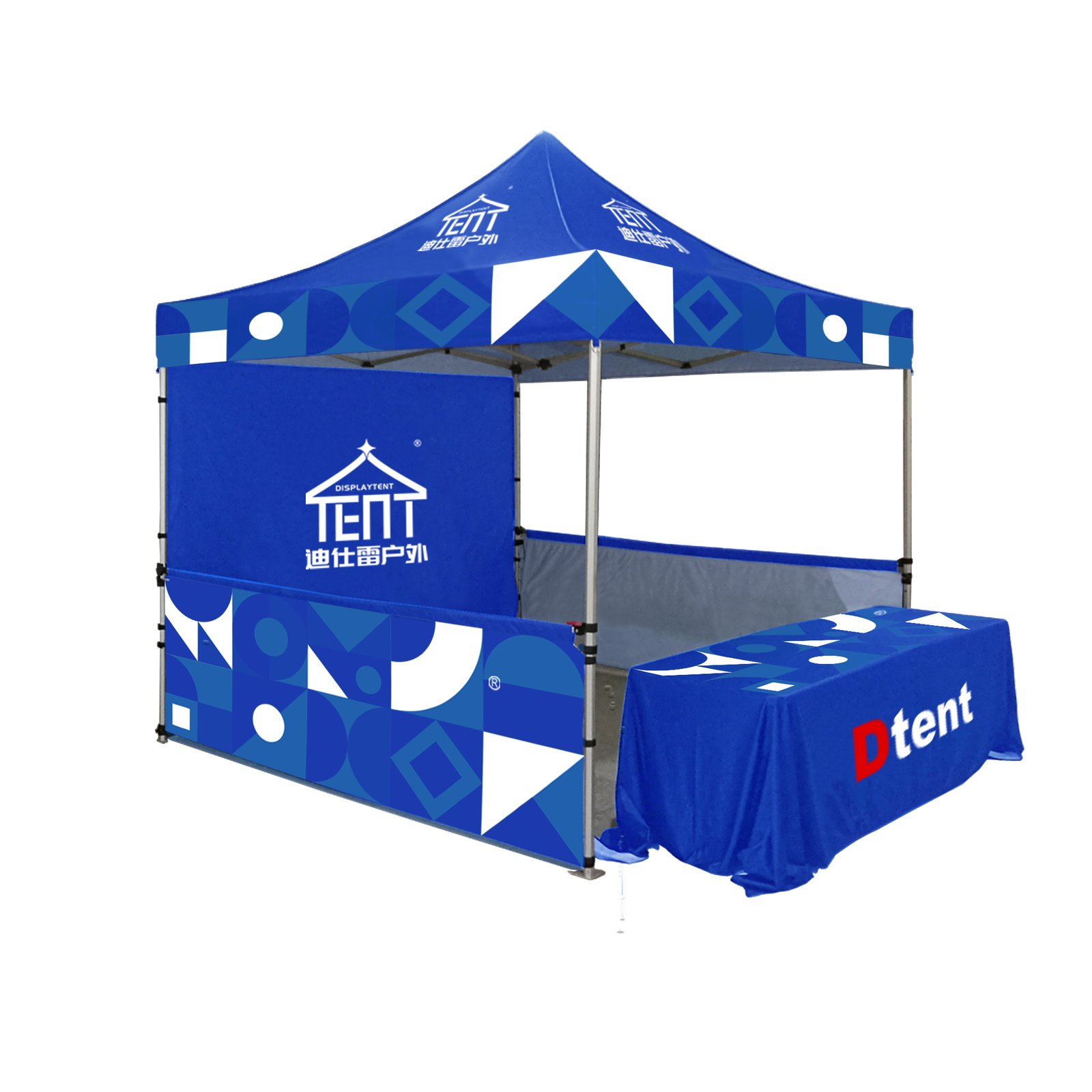
The color-match failure, priced out
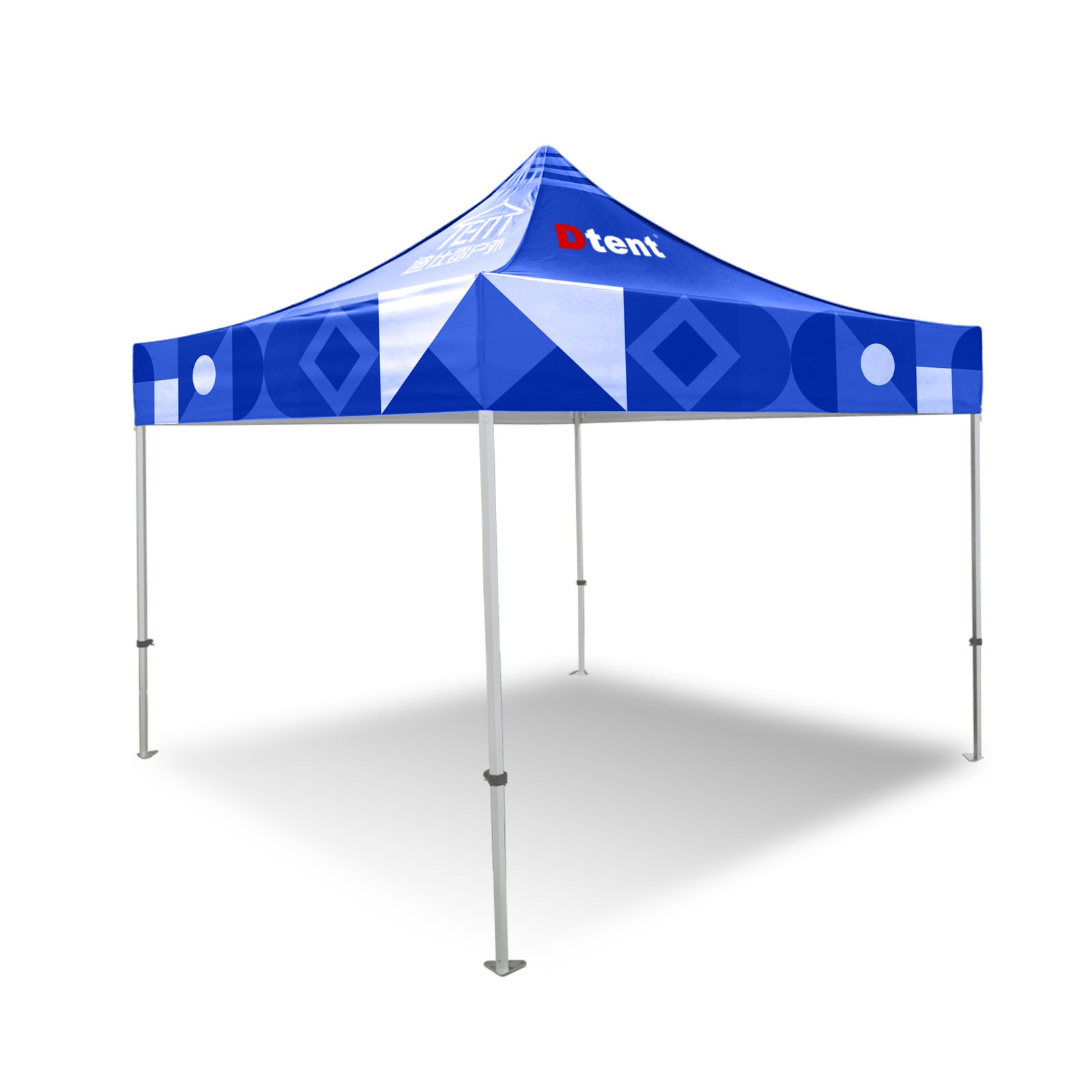
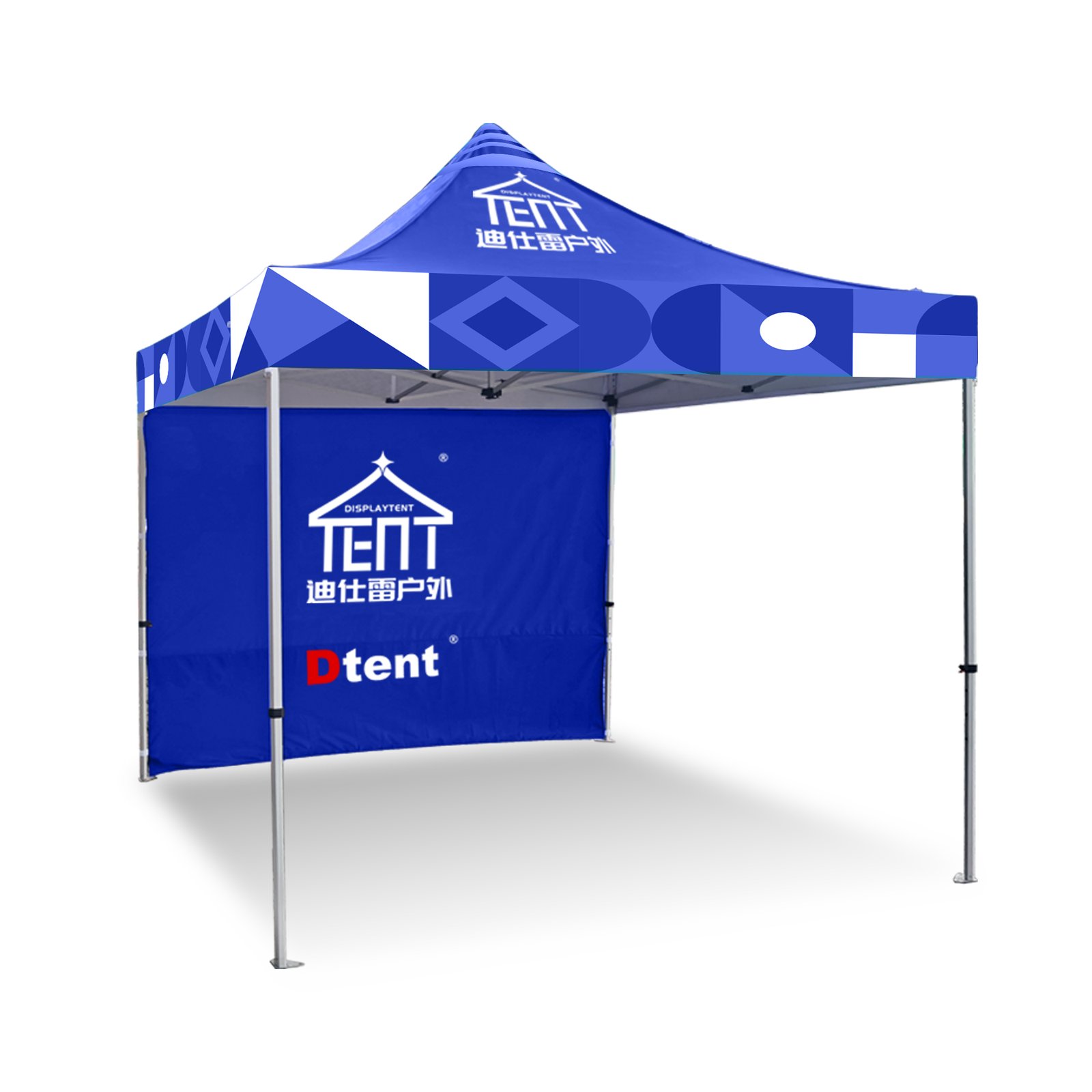
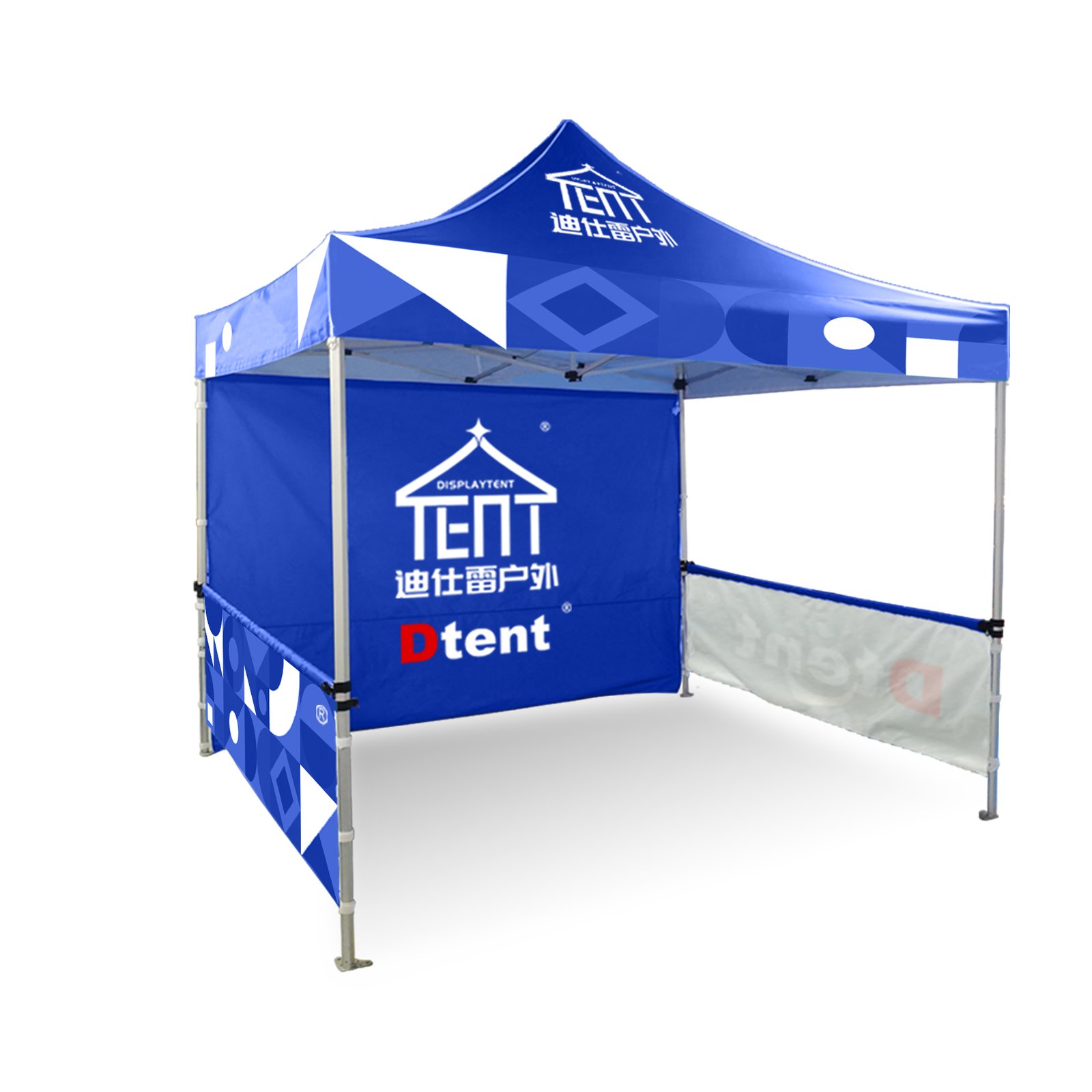
Because it is the hidden cost buyers underestimate most, let's price it properly. Suppose your brand red is Pantone 186C. Supplier A's canopy printer matches it on 420D Oxford. Supplier B's flag shop matches it on lightweight flag polyester — a different weave, different ink absorption. Supplier C's print shop matches it on coated table-cover polyester. Each is "close." Standing two metres apart in the booth, they read as three different reds.
Now the fix: one item must be reprinted. That means a new proof round (a week), new production (another week), and a new freight bill — often express, because the show date has not moved. Total cost of the fix routinely exceeds the original price of the item being fixed. And there is a version of this story we see every season that ends worse: the mismatch is discovered at the show, where no fix is possible at all.
In a kit, this failure mode does not exist structurally. All items print on the same dye-sublimation line, in one production run, against one Pantone profile. We are not claiming our red is magic — we are claiming that one red is guaranteed to be one red.
Time is a cost too: the procurement hours nobody bills
Most buyers never put a number on their own hours, so let's do it. Buying separately for one booth: three quote requests, three proof approvals, three invoices, three payment runs, three tracking threads, three delivery appointments, and the coordination glue between them all — checking that flag A ships after canopy B so customs paperwork aligns, that the table cover drop suits the rented table, that someone is present for each delivery. Counted honestly, that is 6–10 hours of skilled staff time per booth.
A kit order compresses the same work into one quote conversation, one mock-up approval, one payment and one tracking thread — 1–2 hours total. For a company running four or six shows a year, the difference compounds into real working weeks. This is also why, when clients ask us which is "cheaper," our honest answer is: on products alone the kit wins modestly; on total cost of ownership it wins decisively.
When buying separately is genuinely the right call
We would rather lose a line item than sell you a kit you don't need. Three situations where splitting — or simply buying less — makes sense:
- You already own good items. A serviceable canopy from last season only needs two matching flags and a cover. Order exactly the missing pieces from one factory so the new items match each other and design the booth around the old canopy's color.
- Indoor, small, short. A chamber-of-commerce table or a one-day indoor expo may need nothing more than a printed table cover and a banner. A full kit would be under-used — buy small.
- Testing a market on a tight budget. Start with a Starter Kit or even single items, validate the event format, then scale into a Standard or Premium kit once the program proves itself. A $209 kit that earns its keep beats a $680 kit that sits in storage.
Even in these cases, keep all printed items under one roof. The canopy top, flags, covers and walls are the surfaces that must match; tables, flooring and lighting can come from anywhere.
The break-even rule we give our clients
After enough audits, we have condensed this into a rule of thumb. Ask two questions:
Question 1 — how many printed surfaces will stand within sight of each other? Three or more (canopy + flags + table + walls is already four): kit wins, because color match is the dominant risk. One or two: single items are fine.
Question 2 — will this setup repeat? A booth that appears at three or more events a year amortizes one proof cycle, one set of tooling knowledge and one shipping pattern across every appearance — kit economics strengthen with each reuse. A one-off event narrows the gap, though freight consolidation still favors the kit.
Both answers pointing to "many surfaces, repeats" is the clearest kit case. If you want the item-level detail behind a kit — what's in the box, packing math and setup times — our 10x10 booth kit breakdown covers that side of the decision.
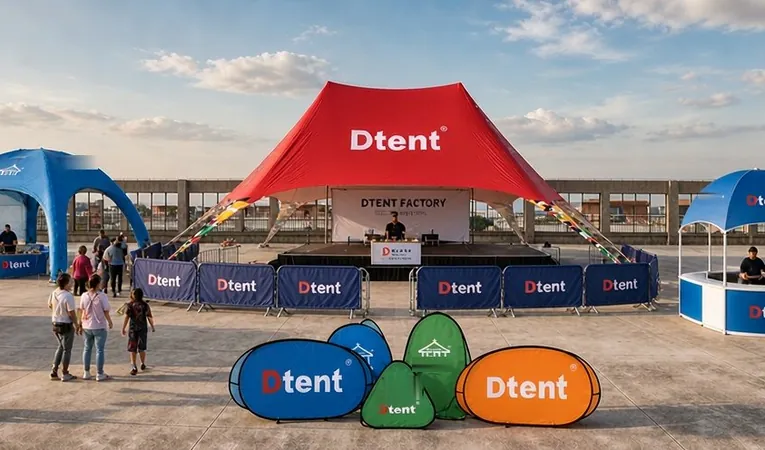
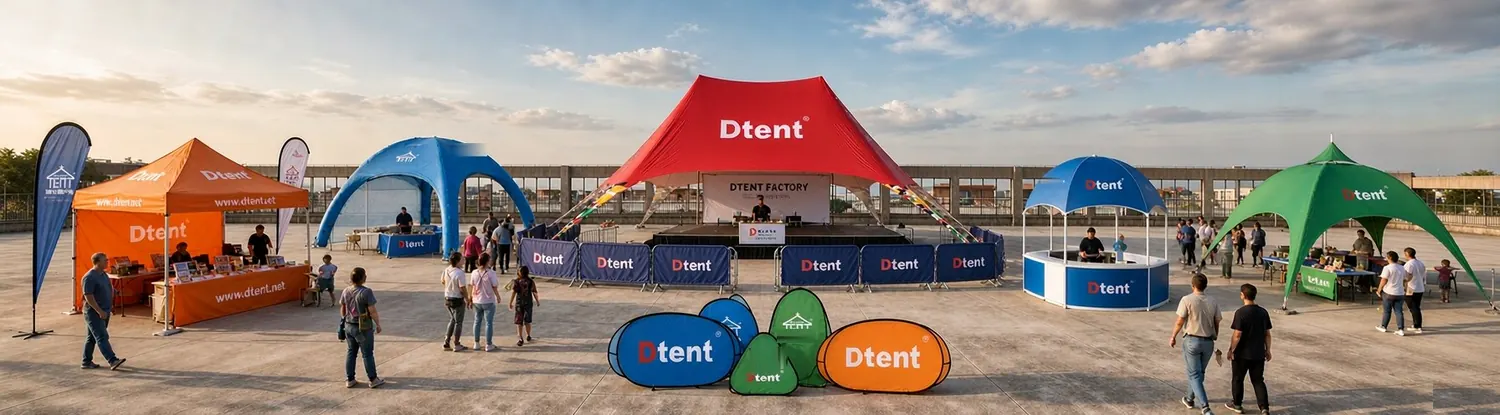
The kit advantage at full scale: canopies, flags, covers, walls and counters — one order, one production run, one container.
Kit pricing at a glance: $209–680 per kit
Our kits are quoted individually, but the published range gives you a budget frame: Starter configurations begin at $209, mid-range Standard kits — the volume favorite for trade shows — sit in the middle of the range, and Premium kits with full wall sets, four flags and a reception counter reach $680. MOQ is one kit, so a sample order carries no commitment penalty; most clients order 5–10 kits per size once the format is proven, and volume discounts apply from 10 pieces. Sizes mix freely in one kit — a 10x20 canopy with six flags is a normal order, not an exception. For how different industries configure the same box, see our industry-by-industry kit guide.
Ordering timeline: plan 6–8 weeks out (US), 8–10 (Europe)
Kit production takes 7–12 working days for standard configurations, and 12–18 days for large mixed orders — bigger than either, the kit window usually still beats the combined lead times of three separate suppliers, because there are three proof cycles and three production queues instead of one. But production is only part of the calendar: add proofing, ocean transit, customs and a buffer, and the comfortable order point is six to eight weeks before a US event, or eight to ten weeks for Europe. The full planning method, including the Chinese holiday windows that surprise first-time importers, is in our lead time guide.
Next step: send us your booth, we'll do the arithmetic
If you are deciding between a kit and a split purchase right now, send us your booth footprint, the items you already own, and your event date. We will return both numbers side by side — a kit quote and an honest list of what you could source locally instead — plus the free 3D mock-up, so the comparison happens on real figures rather than unit prices. Product tiers, configurations and the full specification table live on the Canopy Tent Packages page.