How to Keep a Pop Up Canopy From Blowing Away: Wind, Weights & Anchoring Guide
Every tent factory knows which of its products end up on YouTube. It is not the beautifully printed canopy at the trade show — it is the cheap one cartwheeling across a farmers market parking lot. The video almost never shows a defective frame. It shows an unanchored one. This guide is the anchoring playbook we give our own event customers: how much ballast each leg needs, which anchor works on which surface, why sidewalls quietly sabotage your setup, and the wind speed at which the right answer is to take the tent down.
Updated 11 November 2026 · Reading time about 8 minutes · By the Dtent® events team
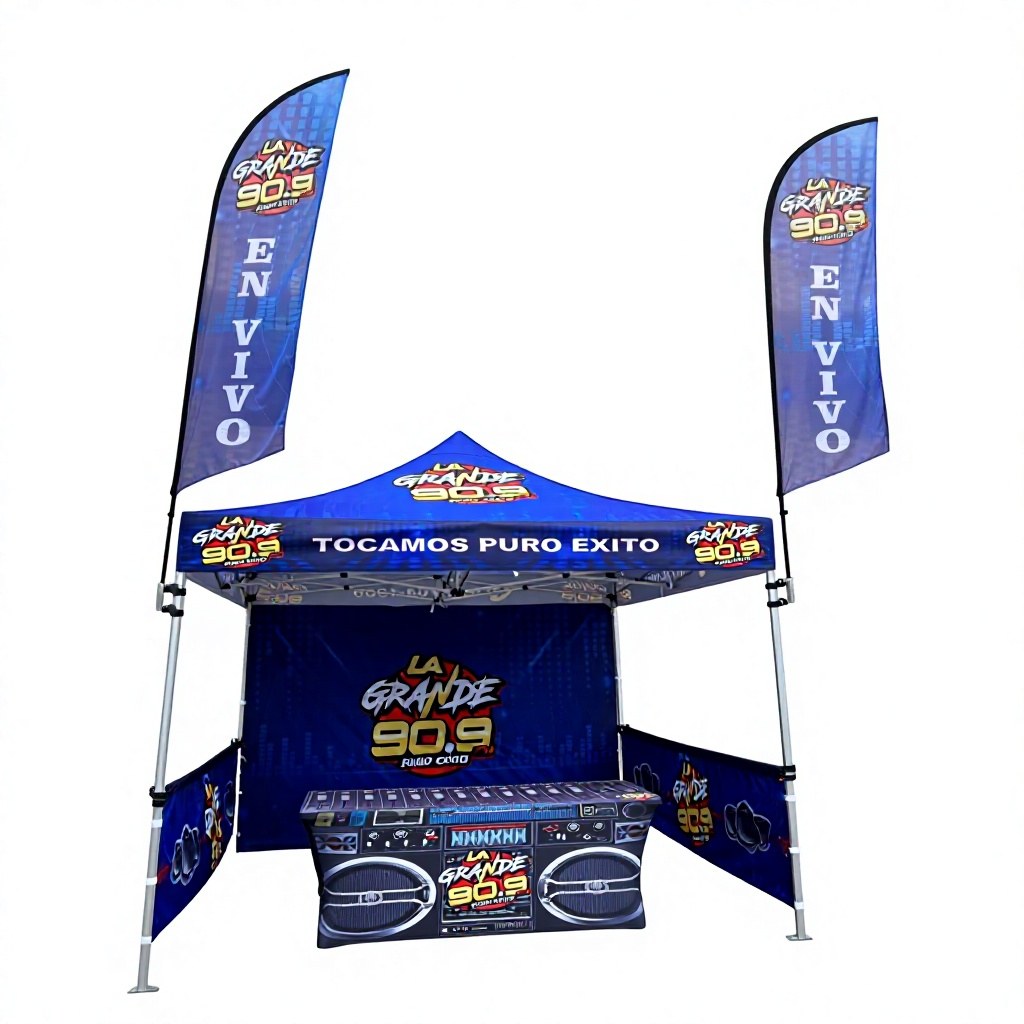
Why pop up canopies blow away
A pop up canopy is, aerodynamically, a table with a wing on top. Wind flowing over the curved roof creates lift underneath the fabric — the same physics that keeps an airplane up, working at parking-lot scale. An unanchored 10x10 canopy starts to lift and shift in gusts of roughly 20–25 km/h, which is a breeze by weather-forecast standards, not a storm. Once one leg lifts, the gust gets under the frame, and the tent goes from "canopy" to "kite" in about a second.
The second reason is human: canopies are the easiest tent in the world to set up, so people treat them as the easiest to leave alone. Nobody plants a 3x3m gazebo without thinking about it. But a pop up frame "stands by itself," so at half the events we visit, four legs touch the ground and nothing holds them there. That is the entire failure.
How much wind a well-built canopy actually handles
Honest numbers, from a factory that tests frames: a properly anchored event-grade canopy — hexagonal aluminum legs, tensioned fabric top, ballast on every leg — is happy through a normal outdoor event day, including gusty conditions. Our guidance to customers is to take the canopy down in sustained winds above roughly 50 km/h, and earlier if the tent carries full sidewalls or the roof is collecting rainwater. No temporary canopy is engineered to ride out a storm, and any supplier who tells you otherwise is selling you a story, not a tent.
Two things separate a canopy that rides out a gusty afternoon from one that becomes viral content, and neither is the frame grade. First, anchoring: every leg needs a load path to the ground. Second, geometry: how you orient the tent relative to the wind matters as much as what holds it down. We cover both below.
The four ways to anchor a canopy
Every anchoring method comes down to one of two ideas: mass (something heavy on the leg) or grip (something holding the ground). Pick by surface, not by price:
| Sandbags | The default. Fill on site, easy to transport empty, work on every surface. One bag per leg — four bags per standard 10x10 tent. |
| Stakes and spikes | Strongest grip, cheapest option — but only where you can drive into the ground: grass, soil, sand. Use the corner stake loops; angle stakes away from the tent. |
| Water-weight bags | Flat bags that wrap the leg and fill from a hose. Neater than sand for corporate and indoor-adjacent events; empty flat for freight. |
| Ground anchors | Screw-in or helical anchors for grass and turf where stakes are too short or the soil is loose. Slower to install, best holding power of any option. |
A note on what not to use: people, coolers, crates and "the van parked next to it" are not anchoring systems. When the gust arrives, they are not attached to the frame — which is the whole point of an anchor.
How many sandbags you actually need
The setup we recommend with every tent we ship is simple: one sandbag per leg — four bags for a 10x10, six for a 10x15, eight for a 10x20. That covers normal event-day wind for a roof-only canopy. For exposed sites — beaches, open fields, coastal promenades — double the ballast and add stakes through the corner loops wherever the surface allows.
If you are buying generic ballast rather than purpose-made canopy sandbags, a common industry rule is 20–40 lbs (about 10–18 kg) per leg for a 10x10 in moderate conditions, scaling up with size and with any added sidewalls. Distribute the weight evenly: four heavy bags on two legs and two bare legs is worse than four medium bags, because the bare legs are exactly where the frame will start to lift.
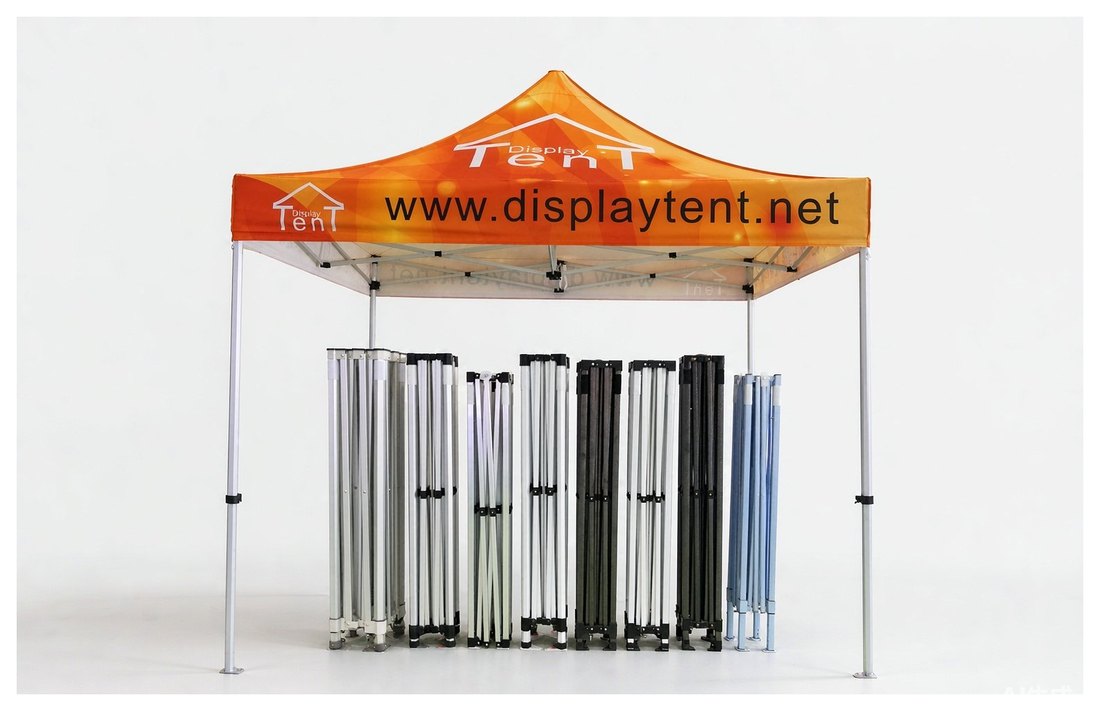
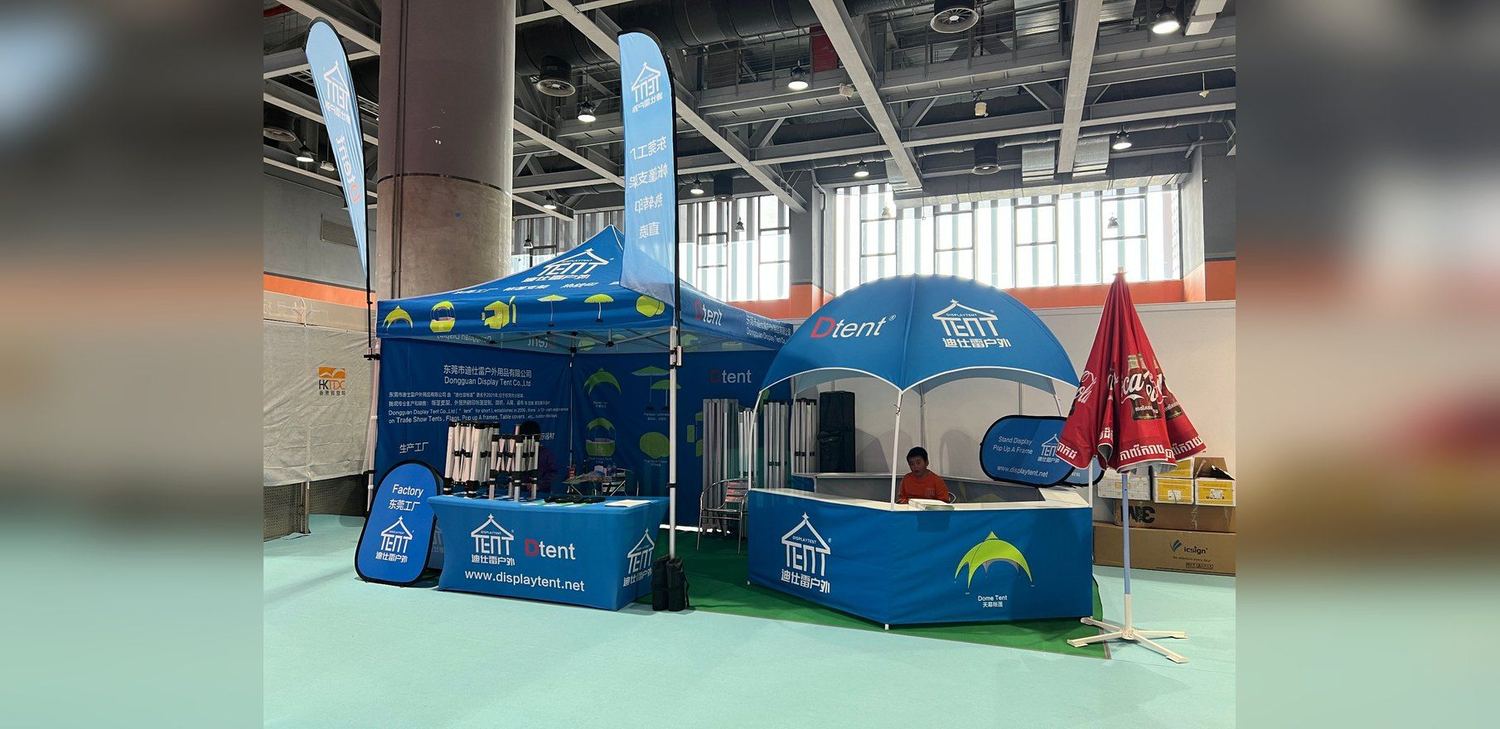
Anchoring by surface: grass, asphalt, sand, turf, indoors
Grass and soil. The best case: stakes grip properly and cost nothing. Drive a stake through every corner loop at roughly 45° away from the tent, and add sandbags if gusts are forecast. Stakes alone are fine for calm days; stakes plus ballast is the event standard.
Asphalt and concrete. No drilling, no stakes — weight is your only tool. Sandbags or water-weight bags on every leg, and accept that a fully walled tent on hard standing in open wind is a combination to avoid (more on walls below). On smooth indoor-adjacent concrete, water bags look cleaner than sand for corporate clients.
Sand. Stakes are nearly useless in soft, dry sand — they pull out at a fraction of the force they hold in soil. Wide-base sand stakes help; heavy ballast on every leg helps more. Beach setups live on mass, which is why beach vendors are the heaviest users of canopy sandbags.
Turf and event floors. Ground anchors screw in cleanly without ripping the turf; water-weight bags sit flat where anchors are not allowed. Indoor expo halls are the one place an empty frame is genuinely fine — but check the venue rules, because fire marshals care about anything overhead.
Sidewalls: the sail effect nobody plans for
This is the mistake we see most from otherwise careful buyers. A roof-only canopy sheds wind reasonably well. Add full sidewalls and you have built a sail: the wind load roughly doubles, and it now pushes on the frame from the side — the direction pop up legs are weakest. Most canopy collapses we are shown photos of were walled tents on legs that were anchored for a roof-only load.
The fix is not "no walls" — walls carry your branding and your pricing. The fix is asymmetric walls: walls on the wind-sheltered sides, the windward side left open so air flows through instead of pushing. Valance-only and half walls give you visible branding with a fraction of the load. And every time you add walls, scale up the ballast accordingly. A 10x10 with four full walls in open wind is not a four-sandbag tent anymore.
Site selection beats hardware
The cheapest wind protection is a five-minute walk before setup. In priority order:
- Back the windward side onto something solid. A building, a fence, a row of vehicles — a hard upwind edge does the work of a dozen sandbags.
- Avoid the wind tunnel. Gaps between buildings, the lee side of stages, the open end of a parking structure: these funnel and accelerate wind. A sheltered-looking spot between two buildings is often the gustiest place on site.
- Angle the roof into the wind. Pitch the high side toward the prevailing wind so air flows over the roof instead of catching the open underside.
- Leave the windward wall off. Covered above, worth repeating: airflow through the tent is safer than a sealed box.
- Group tents with gaps, not abutted. Two canopies pitched edge-to-edge share gusts; a 2–3 m gap breaks the load path between them.
The 10-minute pre-event wind check
Run this list before doors open. It takes one coffee:
| Forecast | Check gust speed, not average speed. Gusts are what lift canopies. Anything forecasting gusts near 50 km/h means a take-down plan, not just ballast. |
| Legs | Walk all four (or six or eight): every leg has an anchor attached to the frame, not merely near it. |
| Fabric | Top tensioned, straps snug, no sagging corners — loose fabric flaps, and flapping fatigues both stitching and frame joints. |
| Walls | Windward side open; wall attachments seated in their tracks so a gust cannot unzip them. |
| Accessories | Flags, banners and inflatables on or near the canopy have their own anchors — a flag kit that outlasts the tent still becomes a missile. |
| People | Someone owns the weather call for the day. One name, one phone, one authority to order the take-down. |
When to take it down — and how to make that call
Sustained wind above roughly 50 km/h is our published take-down line, and we mean it even for our premium hexagonal aluminum frames. If the forecast is marginal, take the roof panel decision early: a canopy dropped in ten calm minutes is a five-minute job; the same canopy dropped in a 60 km/h gust is a wrestling match with four people holding a kite.
One more thing worth knowing: the failure mode of a fabric canopy is the gentle one. A frame that lifts comes down soft — bent legs at worst, and nobody underneath should ever stay there, which is the real rule. The scary failure modes belong to rigid structures. A pop up that folds flat weighs a few dozen kilograms and collapses inward; it does not shatter like acrylic or cartwheel like a hollow board. Take it down in time and the worst case is a late lunch.
Wind-ready frames: what to look for when buying
Anchoring does most of the work, but frame geometry sets the ceiling. When you compare quotes, these are the specs that matter in wind:
- Leg profile and diameter. Square steel tube in 30/40mm is the budget workhorse. The premium option is hexagonal aluminum in 40/50mm — the hex profile resists bending better than a square tube of similar weight, which is why it is our recommendation for exposed sites.
- Wall thickness. Thin-wall legs (0.8mm) flex and fatigue; 1.2–1.5mm walls are the event-grade range. This spec is where cheap tents quietly save money.
- Fabric weight. A 420D PU-coated Oxford top or 500D PVC top holds its tension in gusts; thin fabric flaps itself loose over a season.
- Warranty. We back both steel and aluminum frames for 2 years against manufacturing defects — a factory confident in its joints puts a number on them.
If you are weighing frame grades against budget for the first time, walk through the five decisions in order in our canopy buying guide — wind exposure is decision number two for a reason.
Wind, insurance and event permits
A trend worth knowing if you sell event services: venues and municipal event offices increasingly ask for your anchoring plan in writing. Some US venues now specify minimum ballast per leg on temporary structures, and public-liability insurers take a dim view of a "the wind took it" claim on an unanchored tent. A one-page plan — tent sizes, anchor type per surface, bag counts per leg, named weather-call person — costs you nothing at quotation time and has quietly won bids. Buy the sandbags. They are the least photogenic line item in your booth budget and the one the adjuster asks about first.
Next step
If you are specifying canopies for outdoor events, tell us the venue type — grass field, beach, urban plaza, expo hall — and how exposed it is. We will recommend the frame grade, fabric weight and anchoring kit that match, and quote accordingly; printed orders run 12–18 working days after artwork approval, blank stock ships in 3–5. Sizes, frame options and the full spec table are on the custom pop up canopy product page, and if you are deciding between footprints first, start with 10x10 vs 10x15.